
MATERIALS GUIDE · UPDATED 2026
Titanium cutting board pros and cons come down to one question: is easier cleanup worth faster knife wear? The answer depends on what you want it to do. Titanium has genuine appeal as a hard-wearing, nonporous, low-maintenance food-prep surface. But there’s one tradeoff buyers should understand before switching from wood or plastic: it can dull knife edges much faster.
Are Titanium Cutting Boards Actually Worth It?
A titanium cutting board looks sleek, does not soak up kitchen odors like porous materials, and is generally simple to wash. That’s compelling if you’ve grown tired of stained, deeply scored boards.
However, independent kitchen-gear tests have reported substantially more knife-edge wear on metal than on wood, plastic or rubber. If you chop vegetables every night with an expensive chef’s knife, that matters.
- Best reason to consider one: Nonporous, easy-clean food preparation.
- Biggest compromise: A harder, less forgiving surface for knife edges.
- Practical approach: Keep a wood or rubber board for intensive chopping and consider metal only as a secondary surface.
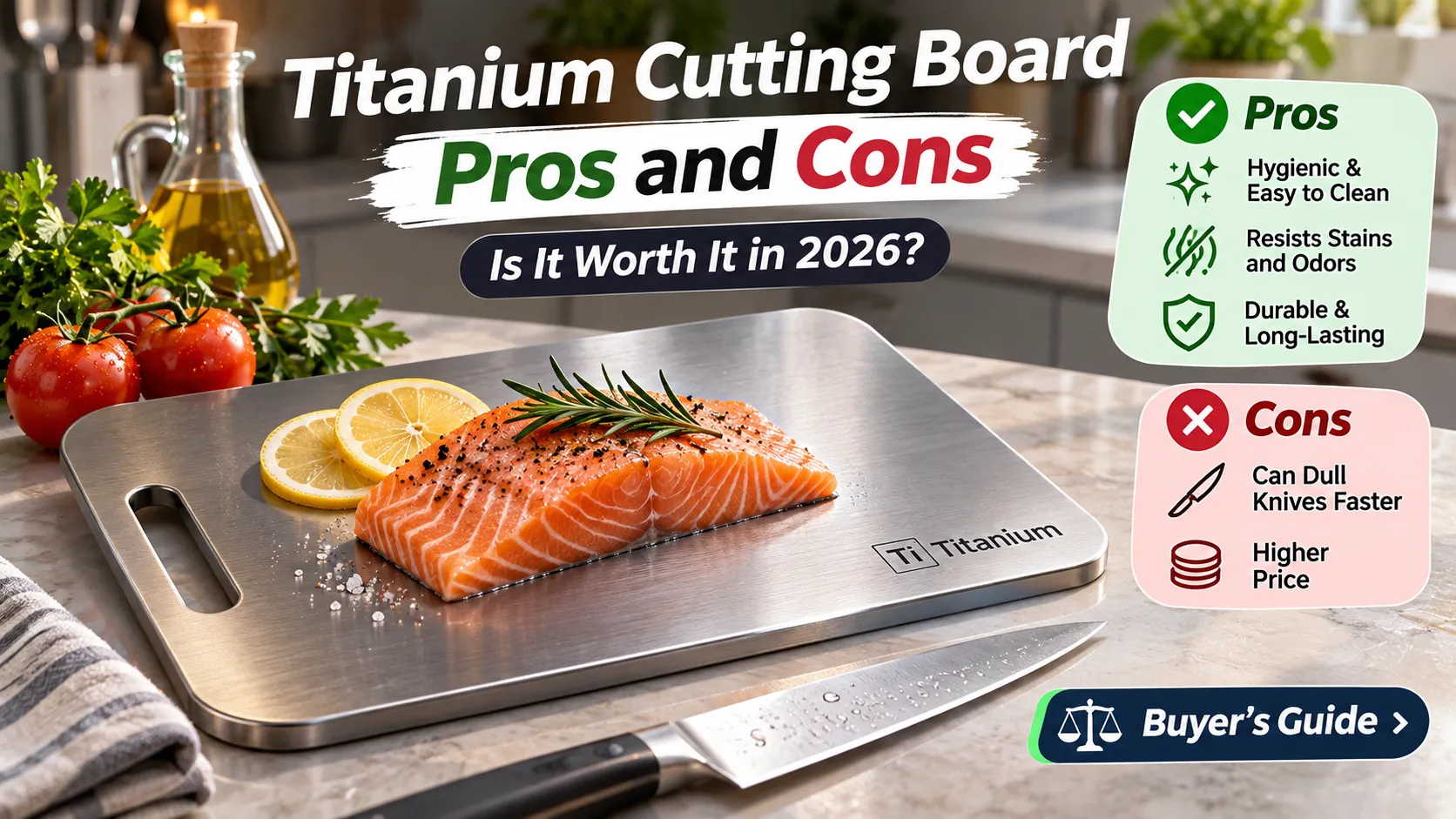
Titanium cutting boards have real pros—easy cleaning, minimal odor absorption and sturdy construction—but the cons outweigh them for many people who prioritize knife sharpness. Buy one for the right job, not because a marketing claim says it replaces every other board.
5 Titanium Cutting Board Pros That Actually Matter
The benefits are practical—not magical. Here’s where a well-made, genuinely titanium cutting surface can make day-to-day kitchen work easier.
A smooth nonporous face is straightforward to clean between tasks.
Garlic, onion and fish smells are less likely to linger in the board material.
The metal surface generally resists absorbing colorful food juices.
Unlike wood, a solid-metal plate won’t swell from absorbed water.
A genuinely solid titanium cutting face avoids plastic shedding from that surface.
Works for staging ingredients, serving and certain low-impact prep tasks.
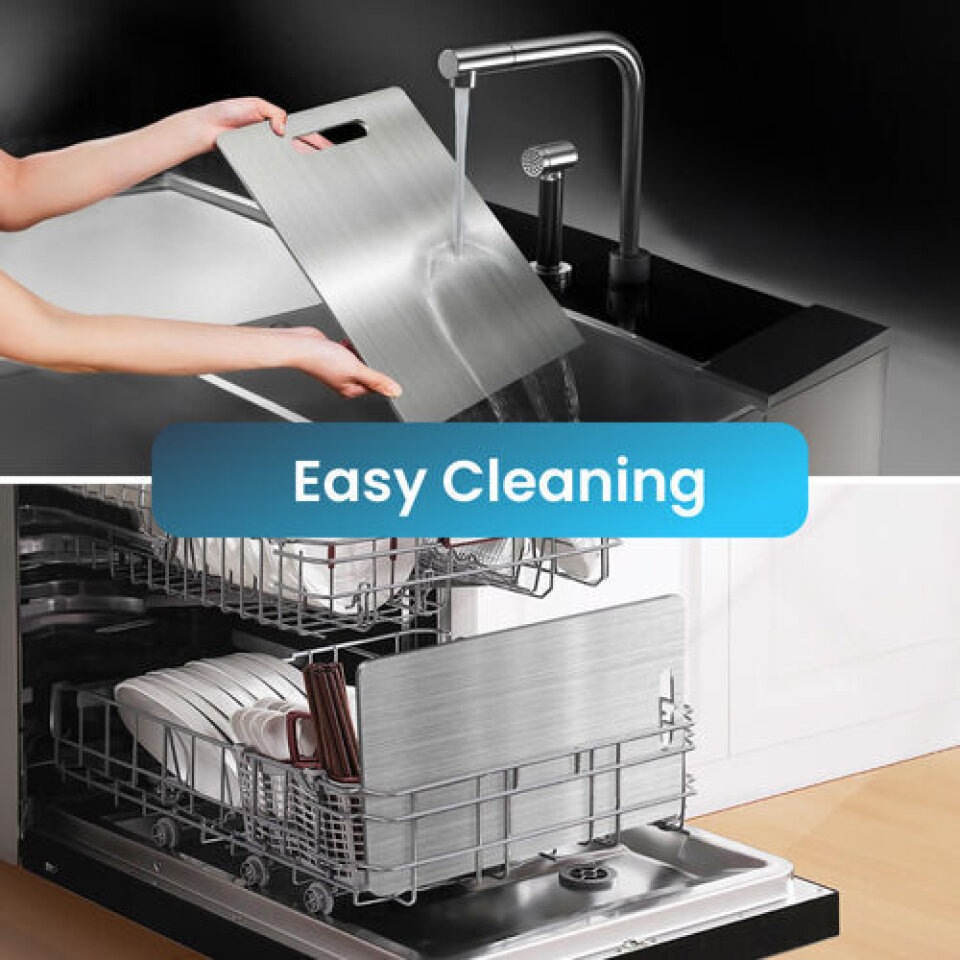
Why the Nonporous Surface Is Appealing
When you’re preparing food throughout the day, an easy-to-clean surface is a meaningful convenience. A solid-metal face doesn’t need the oiling routine of some wooden boards, and it does not absorb moisture in the same way.
That doesn’t mean cleaning becomes optional. Surface residue and cross-contamination still matter, even if the material itself does not absorb odors. Wash between foods and follow your board maker’s care instructions.
For shoppers who want a smaller board dedicated to serving, handling ingredients or occasional prep, this is the strongest argument for titanium.
5 Titanium Cutting Board Cons You Should Know First
These are the disadvantages that turn a good-looking purchase into a frustrating one when the board is used for the wrong job.
The biggest drawbacks
- Knife dulling: The rigid metal face can accelerate edge wear compared with wood or rubber.
- Hard cutting feel: Every knife stroke meets a firm surface with less give.
- Noise and sliding: Cutting may sound harsher, while wet ingredients or ungripped boards may move around.
- Visible scratches: Durable metal can still collect cosmetic cut marks.
- Quality and price uncertainty: Material claims and construction vary widely between sellers.
What the independent tests found
Prudent Reviews’ side-by-side testing measured greater sharpness loss on titanium than on the other tested board materials.
In Serious Eats’ titanium-board test, blade sharpness deteriorated after a small number of cutting strokes. Results vary by knife type, cutting technique and board construction.
The buying lesson: A surface that survives knife contact is not necessarily a surface that’s kind to your knives.
Will a Titanium Cutting Board Dull Your Knives?
Yes, it can, and this is the central compromise. Good chopping boards typically offer enough give to protect a knife’s fine cutting edge. A solid metal board offers much less cushioning. Repeated contact can mean more frequent sharpening and a less comfortable cutting feel.
How fast an edge changes depends on the particular blade, cutting motion and board construction. Still, the direction of the independent evidence is consistent enough that we would not make a titanium board the default surface for premium kitchen knives.
A 2026 Which? cutting-board guide likewise warns that hard cutting surfaces can roll or dull knife edges.
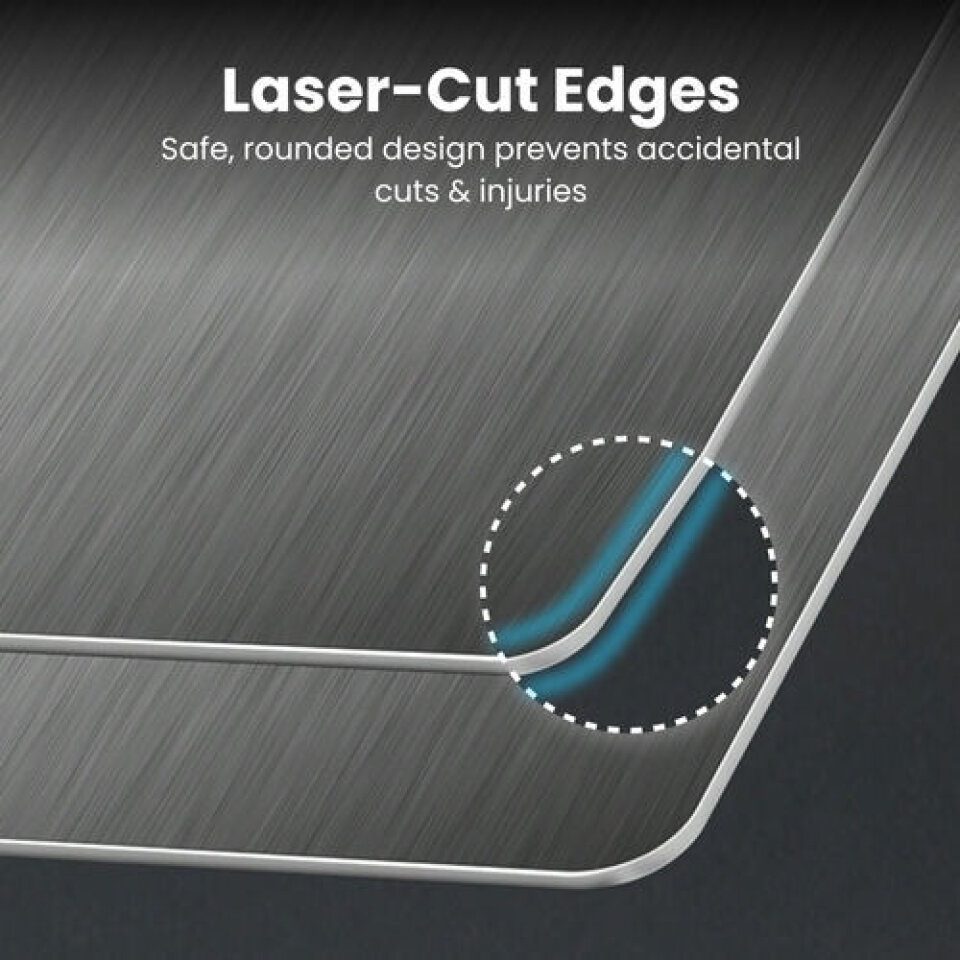
If sharpness retention is your first priority, use a quality wood or rubber board for daily slicing and chopping. If easy cleanup matters more, a separate nonporous board may make sense—but that does not erase the knife-wear tradeoff.
Titanium vs Wood vs Plastic vs Stainless Steel vs Rubber
There isn’t one perfect cutting-board material for every task. The best option depends on your knife collection, cleaning habits, counter space and how often you prepare raw ingredients.
| Material | Knife-edge friendliness | Cleaning & upkeep | Most sensible role |
|---|---|---|---|
| Titanium | Generally poor for repeated chopping | Nonporous; easy surface wipe-down | Secondary, low-impact prep surface |
| Wood | Generally good | Hand-wash and dry; some types need oiling | Everyday chopping and slicing |
| Plastic | Generally better than metal | Often dishwasher-compatible; replace when deeply scored | Practical separate raw-meat board |
| Stainless steel | Generally poor for repeated chopping | Nonporous and easy to wash | Secondary prep or serving surface |
| Rubber | Generally excellent | Depends on maker and material; follow care directions | Frequent chopping with valued knives |
These comparisons reflect material behavior and the findings of published tests, not a universal performance ranking of every board sold. The thickness, coating, finish and construction of any one product can change the experience.
Titanium vs Stainless Steel: Is One Better?
Both are metals with a nonporous cutting face and can feel harsh under a chef’s knife. Titanium has lower density than common stainless steels, which can help keep an equally sized solid board lighter. But the exact construction matters: a thin steel plate and a thick titanium plate will not necessarily weigh what you expect.
For a future deep dive, titanium versus stainless steel deserves its own comparison. The short version is that neither metal should be sold as an automatic replacement for a knife-friendly chopping board.
Are Titanium Cutting Boards Safe? What About Bacteria and Microplastics?
Safety is one of the biggest reasons shoppers search for metal cutting boards, but it’s important to separate facts about materials from promises about health.
Nonporous Does Not Mean Self-Sanitizing
Titanium does not have the absorbent grain of wood and won’t develop the same type of deep knife grooves as soft plastic. That can make cleaning straightforward. But foodborne germs can still remain on an unwashed board. Claims that a metal board is automatically antibacterial or removes the need for washing are not justified by its appearance alone.
The USDA’s cutting-board guidance recommends washing boards between foods, separating raw meat, poultry and seafood from ready-to-eat ingredients, and replacing surfaces once they become excessively worn or hard to clean.
Does Titanium Prevent Microplastics?
A truly titanium cutting face is not a plastic cutting face, so it will not create plastic particles from cutting directly on that titanium surface. That does not establish that a particular board is completely free of plastic components or that every titanium product is medically safer than every plastic board. Some products combine titanium with plastic or other backing materials.
Microplastic concerns are one factor in choosing a kitchen surface. Knife wear, contamination control and realistic cleaning behavior also matter. If you’d like a plastic-free chopping surface that is gentler on knives than metal, consider well-maintained solid wood.
Is Your “Titanium” Cutting Board Actually Titanium?
Material verification is a more important buying step than glossy advertising suggests. A product sold under a titanium headline may contain a titanium layer, a stainless-steel cutting face, an alloy, or a dual-sided construction.
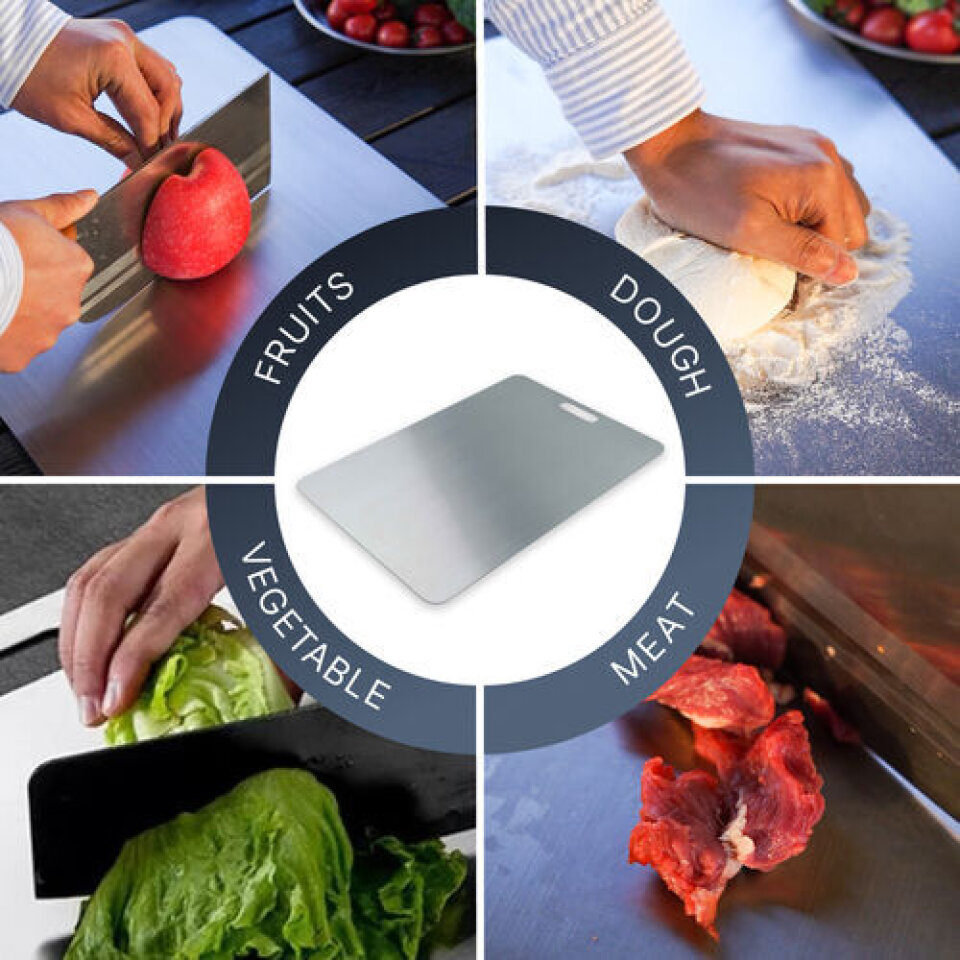
Check These 4 Details Before Ordering
- Exact material: Is it solid titanium, coated steel, or a metal-and-plastic combination?
- Cutting side: Which face actually touches the knife and food?
- Dimensions and weight: Do the stated dimensions and material claims make sense together?
- Care instructions: Is the entire board dishwasher-safe or only one surface?
America’s Test Kitchen’s 2026 metal-board testing summary described finding ordinary stainless steel in products marketed as titanium.
A magnet can sometimes help identify certain steel constructions, but it is not definitive: some grades of stainless steel are also nonmagnetic. Check the board’s listed material and construction rather than judging by a magnet test alone.
Who Should Buy a Titanium Cutting Board—and Who Should Skip It?
Before choosing a specific brand, decide whether a metal board solves a recurring problem in your actual cooking routine.
Consider titanium if…
- You want a secondary, easy-clean prep surface.
- Odor retention and staining matter more to you than a soft knife feel.
- You don’t plan to use it for long sessions of forceful chopping.
- You’re willing to verify material claims and return terms.
Choose wood or rubber if…
- You use high-quality chef’s knives every day.
- You regularly chop, mince or rock your knife on the board.
- You care strongly about quiet, grippy cutting feedback.
- You want one dependable board for most knife-intensive tasks.
Three Titanium Cutting Board Offers Worth Comparing
Shopping for a titanium cutting board? Start with Katori, Katuchef and Vanotium. Compare their board designs, cleaning features and package options, then explore the offer that best fits your kitchen.
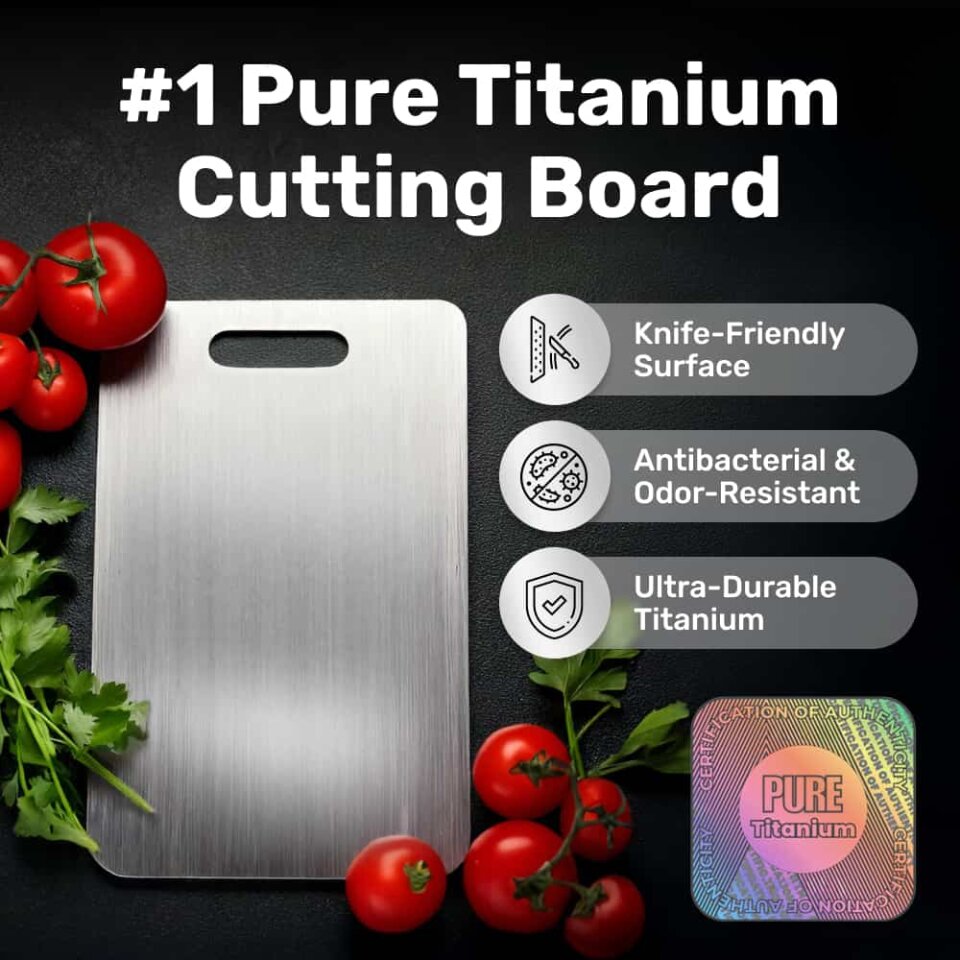
Katori
Katori features two usable cutting sides and a smooth, easy-clean titanium surface. Explore the key features, everyday-use considerations and package choices in our dedicated review.
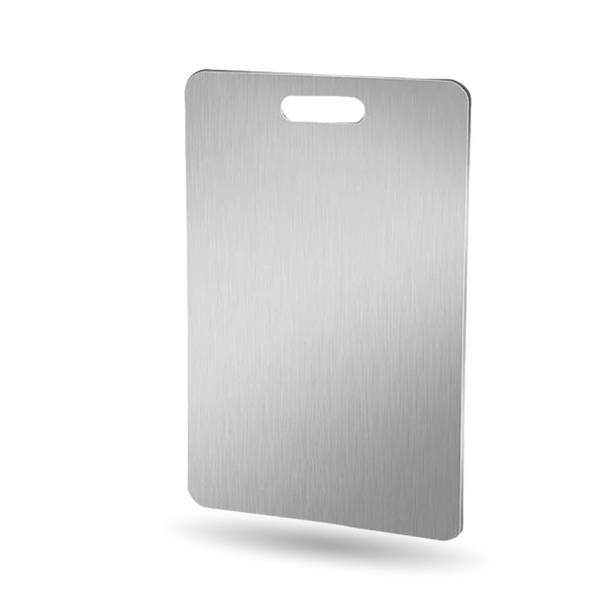
Katuchef
Katuchef emphasizes an easy-clean metal preparation surface. Our dedicated review covers package options and what to consider about everyday cutting.
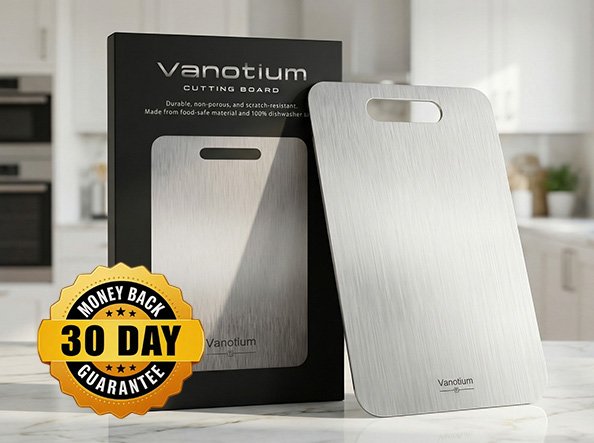
Vanotium
Vanotium focuses on a smooth titanium-surface design and low-maintenance cleanup. Explore the board’s design, dimensions and available packages to see whether it fits your cooking routine.
Compare sizes, materials and bundle options to find the right board for your kitchen.
How to Clean and Maintain a Titanium Cutting Board
Good cleaning habits matter more than an extravagant material claim. A practical routine is simple:
- Remove food residue immediately after use.
- Wash with warm water and dish soap after each food-prep task, and rinse thoroughly.
- Keep raw meat separate from produce and ready-to-eat foods—or clean and sanitize appropriately before switching jobs.
- Dry completely and store the board according to the maker’s guidance.
- Inspect the surface for damage, compromised coatings or hard-to-clean wear over time.
Dishwasher compatibility is product-specific, especially with two-sided boards and bonded backing layers. Follow the actual manufacturer’s instructions rather than assuming every titanium-branded product is the same.
Our Verdict: Are Titanium Cutting Boards Worth Buying in 2026?
For most home cooks who want one main chopping board, we would choose wood or rubber first. Independent evidence about accelerated knife dulling is too important to ignore when the board is used constantly with sharp knives.
But that doesn’t make every titanium cutting board pointless. A clearly specified, easy-clean metal board can work as a second surface for low-impact prep, temporary ingredient staging or serving. In that narrower role, the easy-wash and odor-resistant design offers a real advantage.
A nonporous metal prep surface can be convenient. Just don’t confuse easy cleaning with superior knife protection.
Explore Katori, Katuchef and Vanotium together, check the material details, and choose the offer that suits your kitchen.
Titanium Cutting Board Pros and Cons: Frequently Asked Questions
Are titanium cutting boards good for knives?
Generally, no. Independent tests have found more rapid knife-edge dulling on titanium than on wood, plastic or rubber. A metal board is better treated as an optional prep surface than a default daily chopping surface for expensive knives.
What are the main pros of a titanium cutting board?
The main attractions are a nonporous surface, low odor and stain retention, easy cleaning and durable construction. Some titanium boards are relatively light and can be convenient as a secondary food-prep board.
What are the biggest disadvantages of titanium cutting boards?
The main drawbacks are faster knife dulling, a hard cutting feel, more noise and slipping on some surfaces. Metal can still develop scratches, and some products sold as titanium may be stainless steel or a mixed-material construction.
Is a titanium cutting board safer than plastic?
Neither material automatically makes food preparation safe. Titanium does not shed plastic from a titanium cutting surface, but both materials require cleaning, suitable sanitizing and separation of raw meat from ready-to-eat foods. Health claims about microplastics and antibacterial protection should not be assumed.
Are all titanium cutting boards made of pure titanium?
No. Product descriptions can refer to pure titanium, titanium-coated steel, a titanium side, or mixed-material designs. Independent tests have also found mislabeled steel products. Request an exact material specification rather than relying on the word titanium.
Can titanium cutting boards go in the dishwasher?
Some solid-metal designs can, but the right answer depends on the specific board. Check the maker’s instructions, especially when the product includes a bonded plastic side, anti-slip pads, coatings or other components.
Titanium cutting board vs stainless steel: which is better?
Both are nonporous metal surfaces, but neither is especially gentle on knife edges. Titanium is less dense than stainless steel and can offer a lighter design of equal thickness. Construction and verification matter more than marketing labels.
Is a titanium cutting board worth buying in 2026?
It can be worth considering as a secondary, easy-clean prep surface if you understand the knife-wear tradeoff and verify the materials. For frequent chopping with high-quality knives, a well-maintained wood or rubber cutting board is usually the better first choice.