Katori Cutting Board Review 2026: Is Titanium Worth the Switch?
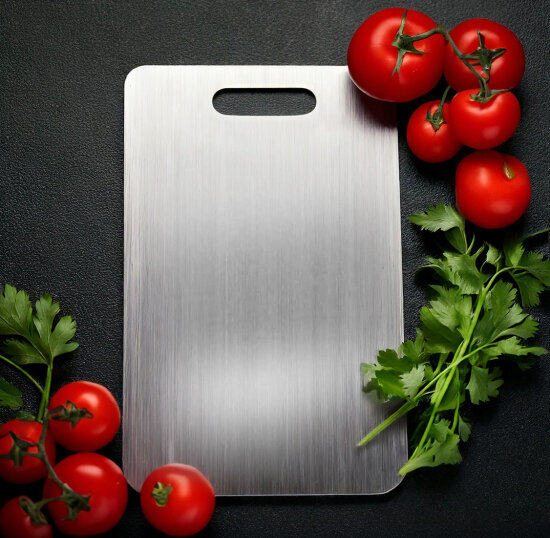
Looking for a cutting board that is easy to clean and doesn’t need the upkeep of wood? The Katori Titanium Cutting Board offers a compact, double-sided, non-plastic prep surface designed for everyday kitchens.
Its 11.4 × 7.9-inch size makes it easy to store and handle, while the smooth surface keeps daily cleanup straightforward. We compare Katori with plastic, wood, stainless steel, and glass so you can see where it makes the most sense—and where a larger board might serve you better.
Is the Katori Cutting Board Worth It?
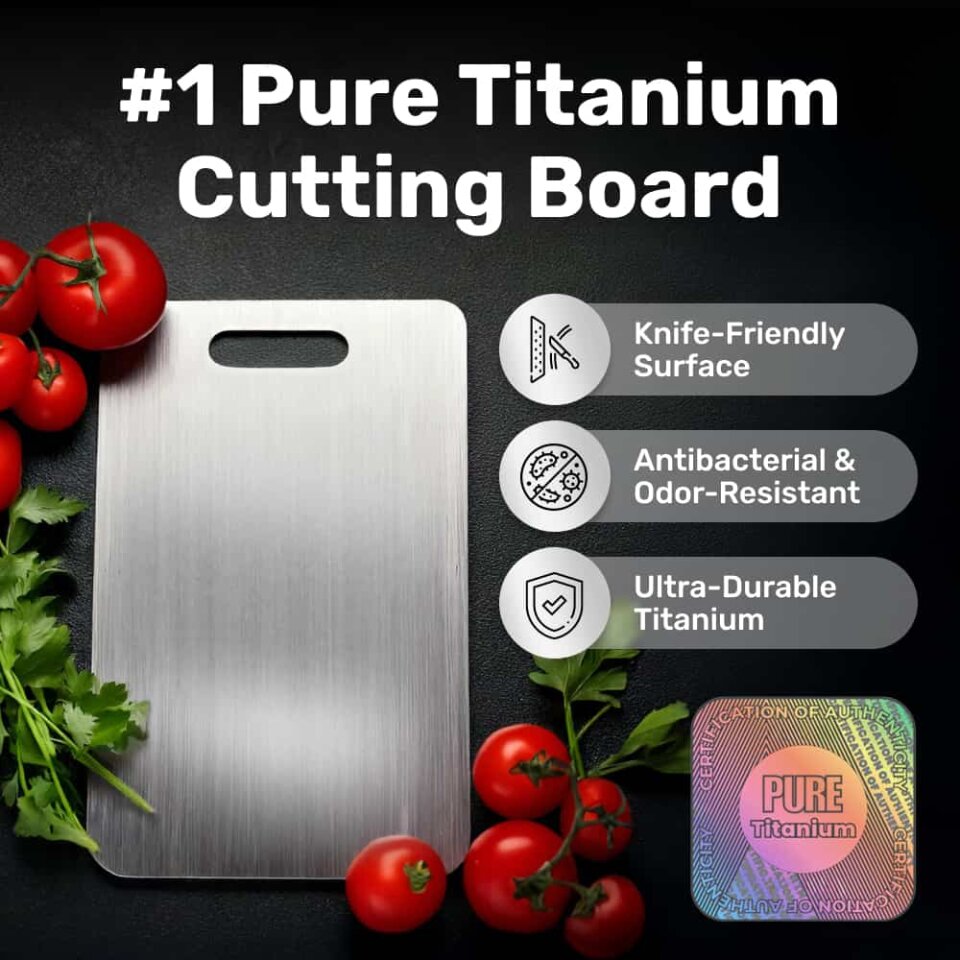
Yes—if your priority is a compact, low-maintenance alternative to plastic or wooden cutting boards. Katori’s titanium format, two usable sides, and simple cleaning routine make it particularly appealing for everyday food prep.
The key reason to consider it is practical: a non-plastic cutting surface that doesn’t need wood-style oiling or conditioning. Its 11.4 × 7.9-inch footprint is convenient for smaller prep jobs, but a large cutting board still makes more sense for carving or bulk preparation.
If you use premium knives, consider your edge-care preferences before switching surfaces; product-specific long-term knife-wear testing is limited.
- Best for: everyday cooks looking for a modern alternative to plastic cutting boards.
- Standout benefit: a non-plastic titanium cutting surface with simple maintenance.
- Convenient size: 11.4 × 7.9 inches (29 × 20 cm) for everyday prep and easy storage.
- Flexible design: double-sided construction for different food-preparation tasks.
- Purchase reassurance: a 30-day money-back policy provides an additional window to decide whether Katori suits your kitchen.
Ready to Upgrade Your Cutting Surface?
If Katori’s compact titanium design fits what you are looking for, you can check the current package options available for your country. Pricing, currency, shipping, and promotions can vary by location and current availability.
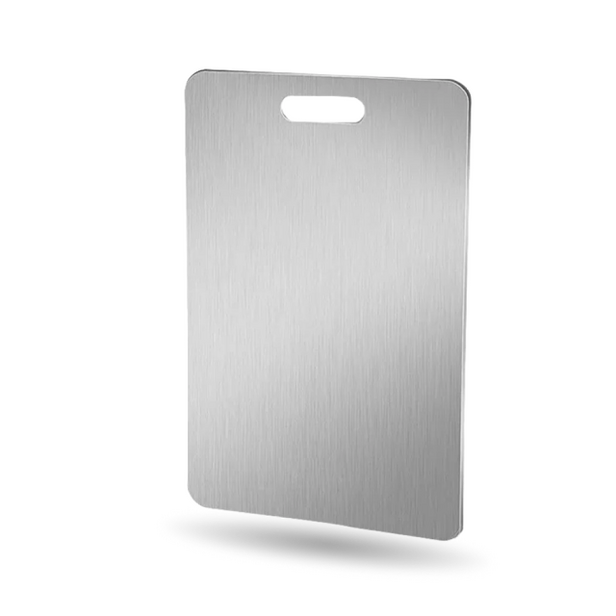
- Non-plastic titanium cutting surface
- Compact 11.4 × 7.9-inch design
- Double-sided for flexible food prep
- Simple everyday cleaning and maintenance
- 30-day money-back policy
Explore Katori’s Current Options
Check the current price, package options, shipping availability, and purchase terms for your country.
Table of Contents
- What Is the Katori Titanium Cutting Board?
- What Makes Katori Different?
- Katori Features & Practical Benefits
- Katori Cutting Board Reviews: What Buyers Say
- Katori Pros & Cons
- What to Know Before Buying
- Is Katori Safe? Titanium, Microplastics & Hygiene
- Does a Titanium Cutting Board Dull Knives?
- Size, Cleaning & Maintenance
- Katori vs Wood, Plastic, Steel & Glass
- Who Is Katori Best For?
- Katori Price & Where to Buy
- Is Katori Legit?
- Final Verdict: Is Katori Worth It?
- Frequently Asked Questions
- Sources & Research Notes
What Is the Katori Titanium Cutting Board?
The Katori Titanium Cutting Board is a compact metal cutting surface designed for everyday food preparation. Katori lists the board as titanium and gives its dimensions as 11.4 × 7.9 inches (29 × 20 cm), making it noticeably more compact than many full-size chopping and carving boards.
Rather than trying to copy the feel of a traditional wooden board, Katori takes a different approach. The smooth metal construction is aimed at shoppers who want a non-plastic, low-maintenance cutting surface that is easy to handle, quick to clean, and simple to store between meals.
The board is also double-sided, giving you two usable preparation surfaces. That can be convenient when separating different food-prep tasks, although normal food-safety practices and proper cleaning are still important when handling raw meat, seafood, vegetables, or ready-to-eat foods.
Material
Titanium cutting surface designed as a non-plastic alternative for everyday kitchen preparation.
Size
11.4 × 7.9 inches (29 × 20 cm), giving Katori a compact footprint that is easy to handle and store.
Design
Double-sided construction provides two usable surfaces for different preparation tasks.
Maintenance
No wood-style oiling or conditioning is required, making the board straightforward to maintain between uses.
Why the compact size matters: Katori should be particularly convenient for vegetables, fruit, sandwiches, smaller cuts of meat, and routine meal prep. If you regularly carve large roasts or prepare ingredients in bulk, however, you may prefer a larger work surface.
What Makes Katori Different From a Regular Cutting Board?
The biggest difference is the cutting surface itself. Most kitchens rely on plastic, wood, bamboo, glass, or composite boards. Katori instead uses a titanium format, giving shoppers another option when they specifically want to move away from plastic cutting surfaces.
That distinction is relevant because research has found that repeated chopping on some polyethylene and polypropylene cutting boards can release plastic particles through surface abrasion. Choosing a titanium cutting surface avoids that particular source of plastic-board abrasion during cutting.
That does not mean a titanium board eliminates microplastic exposure from food, packaging, cookware, or the wider environment. The practical advantage here is narrower and easier to support: the Katori cutting surface itself is not a plastic board.
Non-Plastic Surface
Katori gives shoppers who are intentionally reducing plastic kitchenware an alternative surface for chopping and everyday food preparation.
Non-Porous Construction
A non-porous metal surface does not absorb liquids in the same way porous materials can, while still requiring normal washing after food preparation.
Low-Maintenance Format
There is no seasoning, oiling, or wood-conditioning routine to remember. Regular washing and drying are the main care steps.
Modern Kitchen Design
The slim metallic appearance gives Katori a distinctly modern look compared with conventional wood and brightly colored plastic boards.
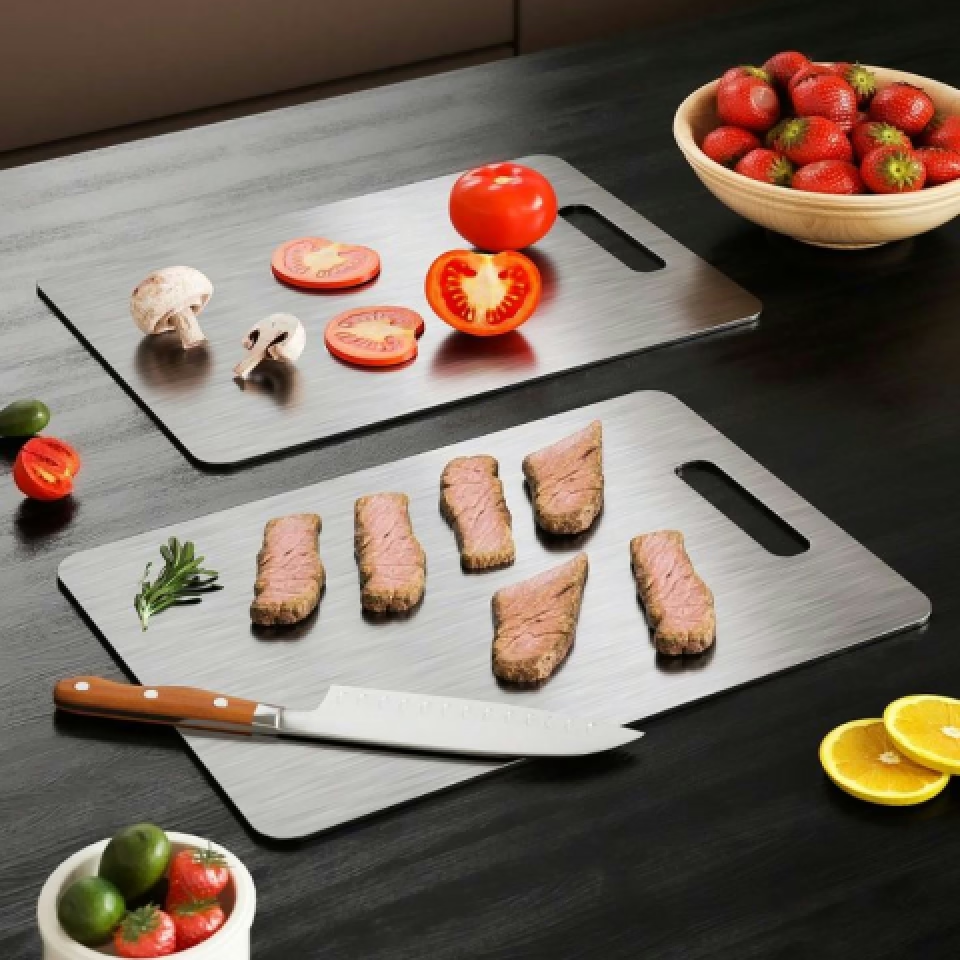
Important distinction: titanium should not be treated as a substitute for good kitchen hygiene. Whatever cutting-board material you use, washing the surface properly and keeping raw-food preparation under control remain essential.
Katori Features & Practical Benefits
Katori’s appeal is less about complicated features and more about making everyday food prep simpler. The combination of two usable sides, compact dimensions, easy maintenance, and a non-plastic surface gives the board several practical advantages for regular home cooking.

Dual-Sided Versatility
Both sides can be used for food preparation, making it easier to organize different cutting tasks on a single compact board. You can, for example, dedicate one side to one type of prep and switch surfaces as needed.

Designed With Knives in Mind
Katori is designed to be more knife-conscious than extremely hard cutting surfaces such as glass or ceramic. We will look more closely at titanium and knife-edge wear later in this review.

Simple Maintenance
There is no need for the periodic oiling or conditioning associated with many wooden boards. Katori’s care guidance focuses on regular washing with warm water and mild soap followed by drying with a soft cloth.

Useful Beyond Daily Chopping
The compact format can work for vegetables, fruit, meat preparation, serving tasks, and situations where a smaller portable cutting surface is more convenient than a large traditional board.
The practical takeaway: Katori makes the most sense for someone who values a non-plastic surface, compact handling, straightforward cleanup, and minimal ongoing maintenance more than having the largest possible cutting area.
Katori Cutting Board Reviews: What Buyers Say
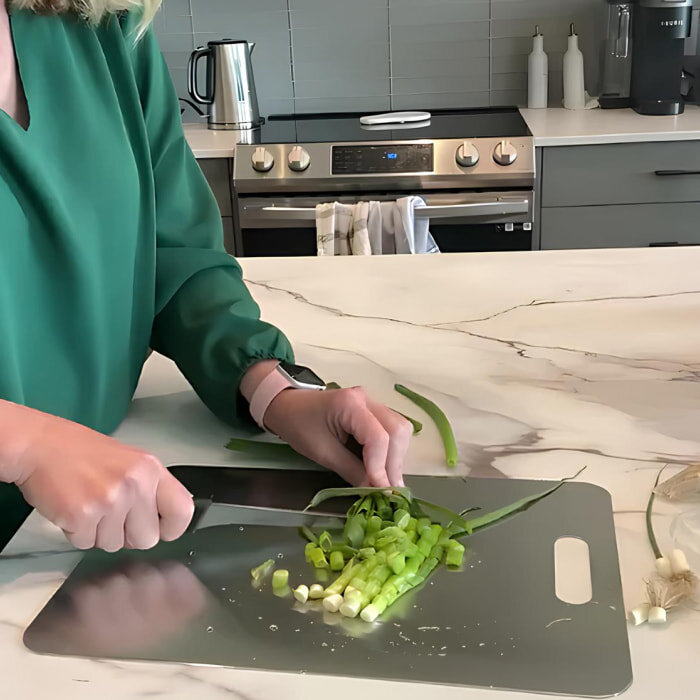
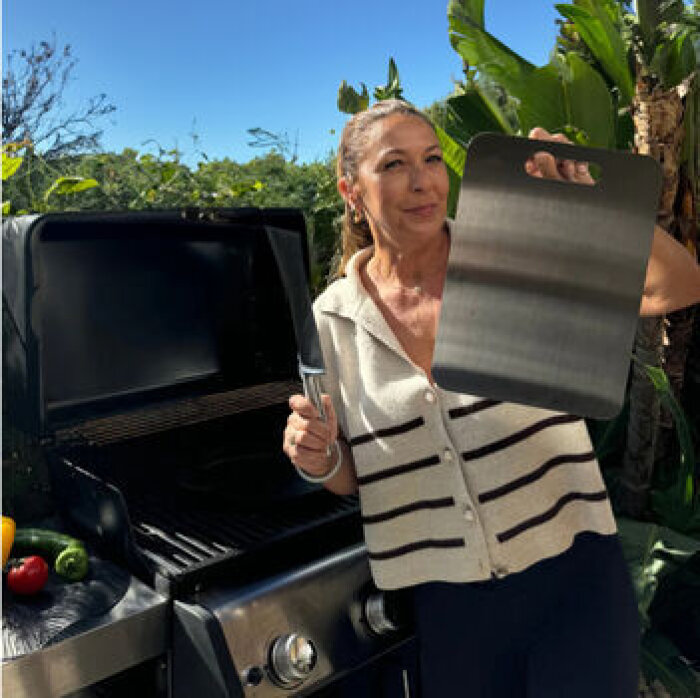
Feedback featured for Katori consistently highlights easy cleanup, everyday convenience, reduced lingering odors, and the board’s modern appearance. Those practical themes are more useful for a buying decision than a headline star rating alone. Several customers describe switching from wood or plastic because they wanted something easier to clean, while others highlight the compact design, portability, or their experience using knives on the titanium surface.
A Common Reason Buyers Like Katori
Easy cleaning is one of the clearest recurring themes. Buyers frequently compare Katori favorably with older wood or plastic boards that developed grooves, stains, or required more effort to clean after food preparation.
Less Concern About Lingering Food Smells
Another recurring theme is odor retention. Feedback particularly mentions strong-smelling foods such as onions and garlic, with users appreciating a surface that feels easier to wash clean after everyday meal preparation.
Compact and Convenient
Customers also highlight the board’s manageable format for regular kitchen tasks. Its compact size can make it convenient for quick chopping, smaller kitchens, storage, and situations where a large carving board would be unnecessary.
Positive Feedback From Knife Users
Some Katori cutting board reviews report positive experiences with blade sharpness during regular use. We treat that as useful customer feedback rather than proof of superior edge retention, since individual knives, cutting technique, blade steel, and frequency of use can all affect wear.
Review takeaway: the strongest pattern in Katori customer feedback is not a complicated technical feature. Buyers repeatedly value the combination of easy cleanup, low maintenance, compact handling, and a modern non-plastic cutting surface.
Katori Cutting Board Pros & Cons
For most shoppers considering Katori, the decision comes down to whether the benefits of a compact titanium cutting surface outweigh the limitations of its size and the unanswered technical questions around long-term knife wear.
Katori Pros
- Non-plastic cutting surface for shoppers looking to reduce plastic kitchenware.
- Compact 11.4 × 7.9-inch size is convenient for everyday food preparation and storage.
- Double-sided design provides two usable preparation surfaces.
- Simple cleaning routine without the conditioning or oiling associated with many wooden boards.
- Non-porous metal surface that does not absorb liquids in the same way porous materials can.
- Modern appearance for shoppers who prefer a slim metallic kitchen aesthetic.
- Positive customer feedback frequently highlights cleanup, odor resistance, convenience, and everyday usability.
- 30-day money-back policy gives buyers additional time to decide whether the board suits their needs.
Things to Consider
- Compact rather than oversized, so it may feel restrictive for large-volume food prep.
- Exact titanium grade is not specified in the product information we reviewed.
- Independent Katori-specific knife testing is limited, so long-term edge performance should not be treated as proven.
- Cosmetic marks are possible with regular cutting and cleaning despite the board’s durability-focused design.
- Normal kitchen hygiene is still required; the material does not replace proper washing or safe food-handling practices.
- Pricing and shipping can vary by location, which is particularly relevant for international buyers.
See the Current Katori Offer
If Katori’s compact titanium format fits the way you prepare food, you can check the current package options, pricing, shipping availability, and purchase terms available for your location.
Pricing, currency, promotions, and shipping availability may vary by country and current offer.
What to Know Before Buying Katori
Katori has several attractive qualities, but there are a few practical details worth understanding before you order. None of these automatically makes the board a poor choice; they simply help set realistic expectations about where it fits best.
It Is a Compact Board
At 11.4 × 7.9 inches (29 × 20 cm), Katori is well suited to everyday chopping and smaller prep jobs, but shoppers who regularly carve large cuts of meat or prepare ingredients in bulk may want more surface area.
The Exact Titanium Grade Is Not Listed
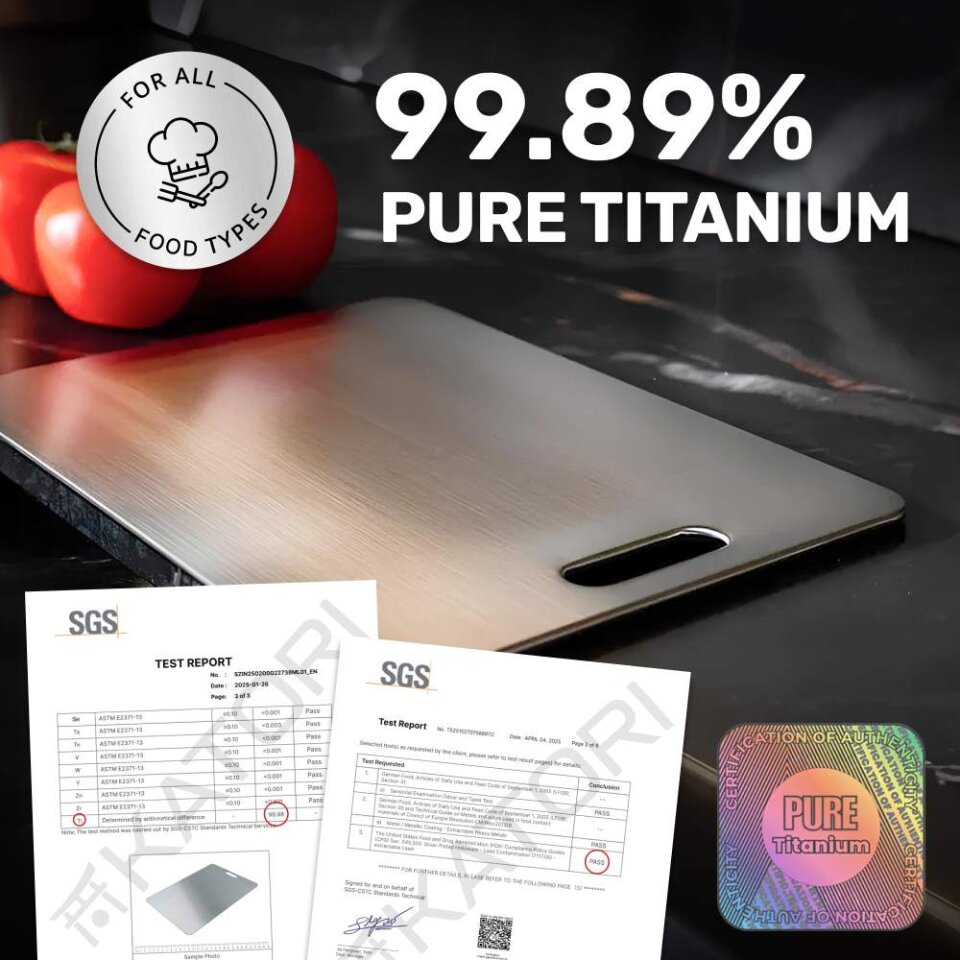
Katori describes the cutting board as pure titanium, but the product information we reviewed does not specify a particular titanium grade. Buyers looking for detailed metallurgical specifications should keep that distinction in mind.
Metal Can Still Show Use
A durable metal surface should not be interpreted as a promise that it will remain cosmetically flawless. Cutting, washing, and regular kitchen use can produce visible surface marks over time.
Normal Cleaning Still Matters
A non-porous cutting surface still needs to be washed after use. Katori’s care instructions recommend warm water and mild soap followed by drying with a soft cloth, while abrasive cleaners and scouring pads should be avoided.
One detail we would not overlook: if you own expensive Japanese knives or maintain extremely fine edges, it is reasonable to consider cutting-surface hardness carefully. Katori is designed to be knife-friendly, but independent Katori-specific edge-retention testing is limited.
Is the Katori Cutting Board Safe? Titanium, Microplastics & Hygiene
One of the main reasons shoppers consider a titanium cutting board is the opportunity to move away from a plastic cutting surface. Katori provides a non-plastic surface for everyday food preparation, which makes it particularly interesting for buyers who are already trying to reduce their use of plastic kitchenware.
What About Microplastics From Cutting Boards?
Research has shown that repeated cutting on some polyethylene and polypropylene cutting boards can release plastic particles as the surface is worn by knives. Because Katori uses a titanium cutting surface rather than a plastic one, it avoids plastic-board abrasion from the cutting surface itself.
What this means in practical terms: choosing Katori removes the cutting board itself as a source of plastic abrasion during chopping. It does not mean that using a titanium board eliminates every possible source of microplastic exposure from food, packaging, cookware, water, or the wider environment.
It is also important not to turn the microplastics discussion into a health claim that current evidence cannot support. Research continues to examine how microplastics affect human health, and the presence of particles does not by itself establish that normal dietary exposure causes a specific health outcome.
Is Titanium Naturally Antibacterial?
Katori’s non-porous metal surface can be straightforward to wash and does not absorb liquids in the same way some porous materials can. However, titanium should not be treated as a self-sanitizing surface. Food residue and microorganisms can remain on a cutting board if it is not cleaned properly.
That means the safest approach is the same one that applies to any cutting board: wash the surface thoroughly after food preparation, take extra care after handling raw meat or seafood, and avoid transferring contamination from raw ingredients to ready-to-eat foods.
Bottom line on hygiene: Katori’s practical advantage is a non-porous, easy-care cutting surface. Proper washing and safe food-handling habits are still necessary regardless of the material you choose.
Does a Titanium Cutting Board Dull Knives?
This is one of the most important questions in any Katori Titanium Cutting Board review. A cutting board needs to be durable, but the interaction between the board and the knife edge matters too, particularly if you use high-quality or finely sharpened knives.
Katori is designed and promoted as a knife-friendly cutting surface, and customer feedback includes positive experiences with everyday knife use. However, we did not identify a controlled Katori-specific test comparing blade sharpness or edge retention against wood, plastic, and other cutting-board materials over an extended period.
For Everyday Kitchen Knives
For typical household food preparation, Katori is designed to provide a practical cutting surface without relying on extremely hard materials such as glass or ceramic.
For Premium Knife Collections
If you use expensive Japanese knives, very thin blade geometries, or carefully maintained fine edges, cutting-surface choice deserves more consideration because even gradual edge wear may matter to you.
What Customer Feedback Tells Us
Some buyers report being satisfied with how their knives perform on Katori, but individual experiences depend on blade steel, sharpening angle, cutting technique, pressure, and frequency of use.
Katori Size, Cleaning & Maintenance
Katori is designed to keep day-to-day maintenance simple. Unlike many wooden cutting boards, there is no regular oiling or conditioning routine to add to your kitchen maintenance schedule.
Board Size
Katori measures 11.4 × 7.9 inches (29 × 20 cm). That compact footprint works well for regular chopping, fruit, vegetables, smaller cuts of meat, sandwiches, and quick meal preparation.
Easy Storage
The relatively compact dimensions make Katori easier to store than many oversized chopping and carving boards, which can be useful in apartments and kitchens with limited counter or cabinet space.
No Oiling Required
Titanium does not require the periodic mineral-oil treatment or conditioning routine commonly associated with wooden cutting boards.
Simple Everyday Care
Regular washing and drying are the main maintenance steps, making Katori a relatively straightforward option for shoppers who prefer low-maintenance kitchen tools.
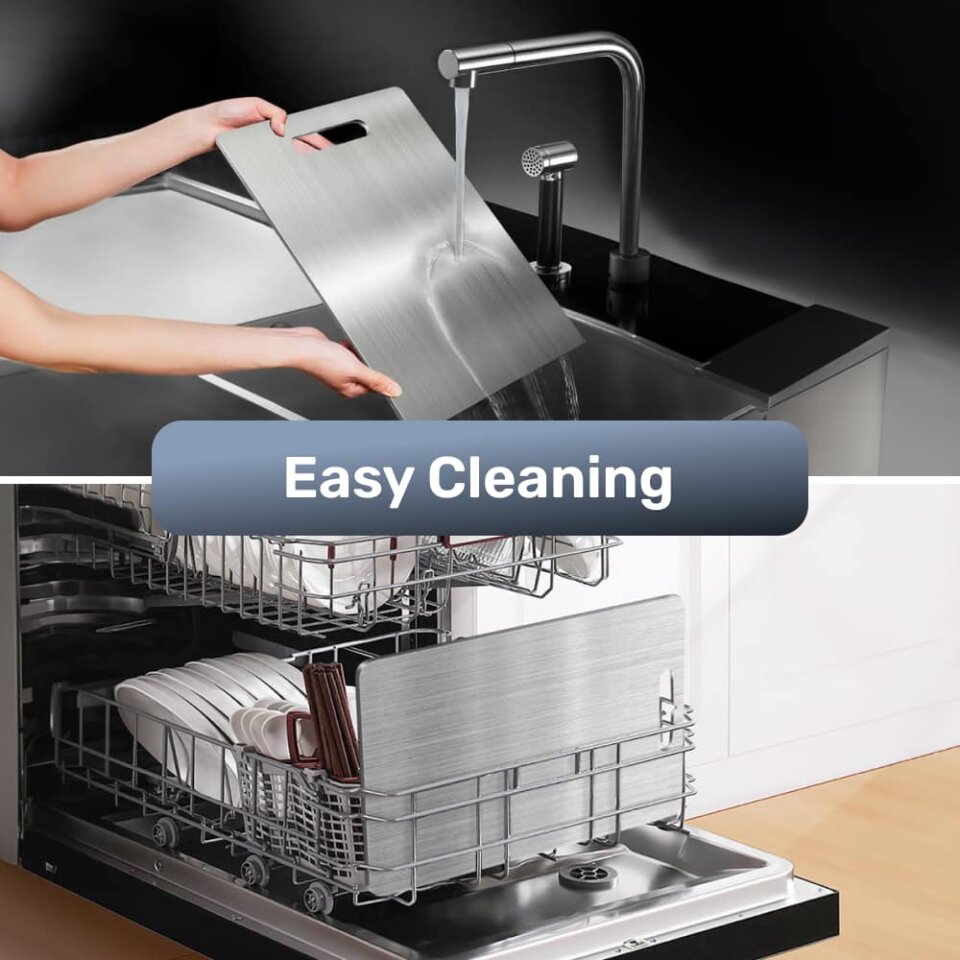
How to Clean the Katori Cutting Board
Katori’s care guidance recommends cleaning the board with warm water and mild soap, then drying it with a soft cloth. Abrasive cleaners and rough scouring pads should be avoided because they may affect the appearance of the surface.
| Care Step | Recommended Approach |
|---|---|
| Routine cleaning | Wash with warm water and mild soap after use. |
| After raw food preparation | Clean the surface thoroughly before using it for another food-preparation task. |
| Drying | Dry with a clean, soft cloth after washing. |
| Abrasive cleaners | Avoid Harsh abrasives may affect the surface finish. |
| Scouring pads | Avoid Rough pads can leave unnecessary cosmetic marks. |
| Wood oil or conditioner | Not Needed Titanium does not require wood-style conditioning. |
Maintenance advantage: for buyers coming from wooden boards, the biggest convenience may be what Katori does not require. There is no oiling schedule, seasoning routine, or special wood-care process to remember.
Will the Surface Scratch?
Regular kitchen use can leave cosmetic marks on a metal cutting surface, so Katori should not be expected to remain visually untouched forever. That is different from saying the board has failed: superficial marks from normal use do not automatically mean the cutting surface is damaged or unusable.
If appearance matters to you, following the recommended cleaning routine and avoiding abrasive scrubbers should help minimize unnecessary cosmetic wear.
Katori vs Wood, Plastic, Steel & Glass Cutting Boards
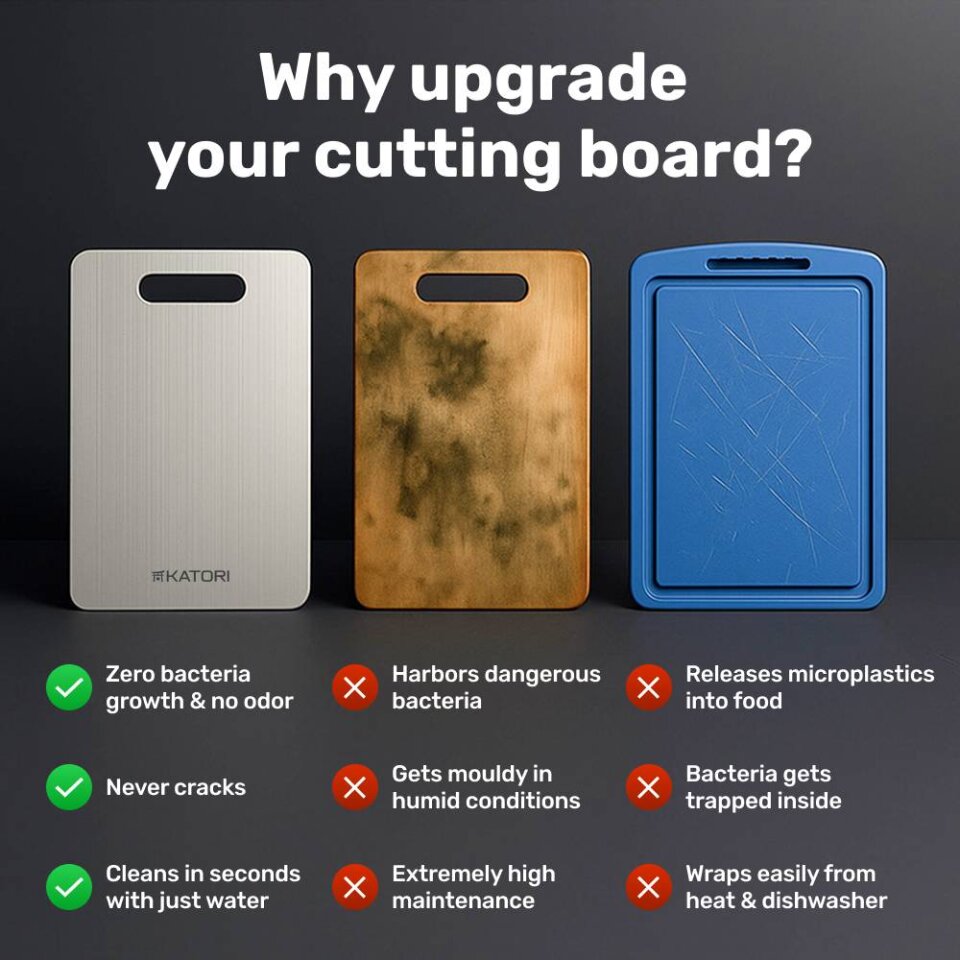
The best cutting-board material depends on what you value most. Katori’s main advantage is not that titanium automatically beats every other material in every category, but that it combines a non-plastic, non-porous surface with simple maintenance and a compact everyday format.
| Material | Maintenance | Moisture Absorption | Plastic Abrasion | Knife Considerations | Best Suited To |
|---|---|---|---|---|---|
| Katori Titanium | Low | Non-porous surface | None From Board | Designed to be knife-friendly, but independent Katori-specific edge testing is limited | Shoppers wanting a compact, non-plastic, low-maintenance board |
| Wood | Moderate to high | Varies by wood and finish | None From Board | Often chosen by knife enthusiasts, depending on the wood species and construction | Cooks who value traditional feel and are comfortable with regular care |
| Plastic | Low | Generally low | Possible With Wear | Commonly used as an everyday cutting surface, although heavily worn boards may develop grooves | Budget-conscious shoppers who prioritize familiarity and convenience |
| Stainless Steel | Low | Non-porous surface | None From Board | Metal-on-metal contact makes knife-edge performance an important consideration | Shoppers prioritizing a washable, non-porous metal surface |
| Glass | Low | Non-porous surface | None From Board | Very hard surface and generally less attractive for shoppers focused on preserving knife edges | Users prioritizing easy wiping and a rigid non-porous surface |
Where Katori stands out: it gives shoppers a way to move away from plastic without taking on the oiling and conditioning routine associated with many wooden boards. Its compact dimensions also make it easier to handle and store than many large traditional chopping boards.
Katori vs Plastic Cutting Boards
Plastic boards are inexpensive, familiar, and widely available, but repeated knife contact can gradually wear the cutting surface. Research involving polyethylene and polypropylene boards has shown that chopping can release plastic particles through abrasion. Katori avoids that specific issue because the cutting surface itself is titanium rather than plastic.
That does not make every plastic board unsafe or mean switching to titanium eliminates overall microplastic exposure. The more precise advantage is that Katori removes a plastic cutting surface from your food-preparation routine.
Katori vs Wooden Cutting Boards
Wood remains an attractive option for many cooks, particularly those who appreciate its traditional feel and knife-friendly reputation. The trade-off is maintenance: depending on the board, wood may require careful drying, periodic oiling, and more attention to long-term surface condition.
Katori takes the opposite approach. There is no wood-conditioning routine, and the non-porous titanium surface is designed around straightforward washing and drying. For shoppers who want minimal upkeep, that difference can be significant.
Katori vs Stainless Steel Cutting Boards
Both titanium and stainless steel can provide non-plastic, non-porous cutting surfaces, but they should not automatically be treated as identical materials. Katori is specifically built and positioned as a titanium cutting board, while conventional stainless-steel boards can differ in construction, thickness, weight, finish, and how they interact with a knife edge.
If you are comparing metal cutting boards, the material name alone is not enough to determine long-term knife performance. The design of the board, the knife being used, cutting technique, and frequency of use can all influence the experience.
Katori vs Glass Cutting Boards
Glass is non-porous and easy to wipe clean, but its very hard surface is one reason many knife-conscious cooks avoid using it for regular chopping. Katori is designed as a more practical everyday cutting surface while retaining the easy-care appeal that attracts some shoppers to non-porous materials.
Who Is the Katori Cutting Board Best For?
Katori is likely to make the most sense for shoppers who specifically value a non-plastic cutting surface, easy cleanup, compact handling, and minimal maintenance. It is less about replacing every cutting board for every possible task and more about offering a convenient everyday option with a different material approach.
Katori Is a Strong Fit If You…
- Want to replace or reduce the use of plastic cutting boards in your kitchen.
- Prefer a non-porous metal cutting surface that is straightforward to wash.
- Do not want the oiling and conditioning routine associated with many wooden boards.
- Usually prepare vegetables, fruit, sandwiches, smaller cuts of meat, and everyday meals.
- Want a compact 11.4 × 7.9-inch board that is easy to handle and store.
- Like having two usable sides for organizing different food-preparation tasks.
- Prefer kitchen tools that require relatively little ongoing maintenance.
- Want a modern metallic alternative to conventional wood or plastic boards.
Think Twice If You…
- Regularly need a large carving or bulk-preparation surface.
- Want detailed certification or metallurgical information about the exact titanium grade before purchasing.
- Own premium knives and require independently tested long-term edge-retention data before choosing a cutting surface.
- Expect a metal board to remain completely free of cosmetic marks after repeated use.
- Prefer the natural feel and appearance of a traditional wooden cutting board.
Best overall match: Katori is particularly appealing for everyday cooks who want to move away from plastic, dislike the maintenance associated with wood, and prefer a compact cutting board that can be cleaned and put away without much fuss.
For larger kitchens: Katori can also make sense as a dedicated everyday prep board alongside a larger wood or composite board used for carving, oversized ingredients, or high-volume meal preparation.
Katori Price & Where to Buy
Katori pricing can vary depending on the current promotion, package size, currency, and shipping destination. For that reason, we do not recommend relying on a single fixed price when deciding whether to buy, especially if you are ordering from outside the United States.
The most useful approach is to check the current Katori offer and compare the available package options for your location. Multi-board packages may also be available for households that want more than one cutting surface or prefer to keep separate boards for different preparation tasks.
Current Price
Pricing and promotions can change over time, so check the current offer before ordering rather than relying on an older advertised price.
Package Options
Available bundles may vary. Compare the total package cost and the number of boards included rather than focusing only on the headline discount.
International Orders
Currency, shipping availability, delivery terms, and final checkout costs can vary by country. Review the details shown for your location before completing your purchase.
Money-Back Policy
Katori currently includes a 30-day money-back policy, giving buyers an additional period to decide whether the product is right for them.
Buying tip: because pricing and promotions can change, use the link below to check the current package options and purchase terms rather than comparing against an outdated price quoted elsewhere.
Check Today’s Katori Options
See the current Katori packages, pricing, shipping availability, and purchase terms available for your location.
Pricing, currency, promotions, package availability, and shipping terms may vary by country and current offer.
Is Katori Legit?
If you are searching for Katori Cutting Board reviews before ordering, it is reasonable to want more than a list of product features. You also want to know whether there is a functioning purchase process, clear product information, customer support, order tracking, and a return policy behind the offer.
Katori is presented through an active direct-to-consumer product offer with a working checkout process, customer-support information, order-tracking options, product-care guidance, and published return terms. The purchase also currently includes a 30-day money-back policy.
Active Checkout
Customers can select available product packages and proceed through an active online ordering process.
Customer Support
Support information is provided for customers who need help with their order or have questions after purchasing.
Order Tracking
An order-tracking option is available so customers can follow the progress of a purchase after it has been placed.
Return Policy
The current offer includes a 30-day money-back policy, subject to the applicable purchase and return terms.
What this does and does not tell us: these are useful signs of an active direct-to-consumer product operation, but they do not guarantee that every customer will have the same shipping, support, or product experience. Always review the current checkout and return terms before ordering.
Final Verdict: Is the Katori Cutting Board Worth It?
Our verdict: Katori is an appealing upgrade for everyday cooks who want a compact, non-plastic cutting surface with simpler upkeep than wood. The value is in convenience, straightforward cleanup, and a design that fits neatly into a busy kitchen.
Katori is especially attractive if you dislike replacing worn plastic boards or maintaining wooden ones. Its 11.4 × 7.9-inch size is easy to handle and store, the double-sided format adds flexibility, and the straightforward cleaning routine keeps ongoing maintenance to a minimum.
The non-plastic surface is another meaningful advantage. A titanium cutting surface avoids the plastic abrasion associated with cutting directly on a plastic board, without requiring the oiling and conditioning routine that can come with wood.
There are trade-offs. Katori is compact rather than oversized, the exact titanium grade is not specified in the product information we reviewed, cosmetic marks can develop with use, and independent Katori-specific knife-edge testing remains limited. Buyers with large prep needs or highly specialized knife collections should keep those points in mind.
Who Gets the Most Value From Katori?
Katori makes the strongest case for everyday cooks who want a non-plastic cutting surface without adding extra maintenance to their kitchen routine. If easy cleanup, compact storage, double-sided use, and moving away from plastic are high on your priority list, its overall design is well matched to those needs.
- Choose Katori for: a non-plastic titanium cutting surface, easy maintenance, compact handling, and everyday meal prep.
- Consider something larger if: you regularly carve large meats or prepare substantial quantities of food at once.
- Consider your knives if: you use premium finely sharpened blades and want independently tested long-term edge-retention data.
- Best reason to buy: you want the convenience of a low-maintenance board while moving away from a conventional plastic cutting surface.
Check the Current Katori Offer
If Katori’s titanium design matches what you want from an everyday cutting board, you can check the current package options available for your location before ordering.
- Non-plastic titanium cutting surface
- Compact 11.4 × 7.9-inch design
- Double-sided for flexible food preparation
- Simple cleaning with no wood-conditioning routine
- 30-day money-back policy
Check the current price, package options, shipping availability, and purchase terms for your country before ordering.
Katori Cutting Board FAQ
Below are answers to some of the most common questions shoppers have before buying the Katori Titanium Cutting Board.
What is the Katori Cutting Board made of?
Katori is marketed as a titanium cutting board designed to provide a non-plastic, non-porous surface for everyday food preparation. The product information we reviewed does not specify the exact titanium grade or alloy composition, so we would not assume a particular grade beyond the information provided for the product.
What size is the Katori Titanium Cutting Board?
Katori measures approximately 11.4 × 7.9 inches (29 × 20 cm). It is a relatively compact cutting board suited to everyday chopping and food preparation, although shoppers who regularly carve large meats or prepare large quantities of food may prefer a bigger work surface.
Is the Katori Cutting Board safe for food preparation?
Katori provides a non-plastic, non-porous cutting surface that can be washed after food preparation. However, titanium should not be treated as a self-sanitizing material. Proper washing, separation of raw and ready-to-eat foods, and normal food-safety practices are still important.
Does the Katori Cutting Board release microplastics?
Because the Katori cutting surface is titanium rather than plastic, normal knife contact with the board does not create plastic particles through abrasion of a plastic cutting surface. That does not mean using Katori eliminates every possible source of microplastic exposure from food, packaging, water, or the wider environment.
Does a Katori titanium cutting board dull knives?
Katori is designed and promoted as a knife-friendly cutting surface, and customer feedback includes positive experiences with everyday knife use. However, we did not identify independent Katori-specific controlled testing that compares long-term knife-edge retention against wood or plastic boards. Knife wear can also vary with blade steel, edge geometry, cutting technique, pressure, and frequency of use.
How do you clean a Katori Cutting Board?
Katori’s care guidance recommends washing the board with warm water and mild soap and drying it with a soft cloth. Abrasive cleaners and rough scouring pads should be avoided because they may affect the surface finish.
Is the Katori Cutting Board dishwasher safe?
The care guidance we reviewed specifically recommends cleaning Katori with warm water and mild soap and drying it with a soft cloth. Because that is the stated care method, we recommend following those instructions rather than assuming dishwasher compatibility based on individual customer experiences.
Does Katori require oiling or conditioning?
No wood-style oiling or conditioning routine is required. This is one of Katori’s practical advantages for shoppers who want a lower-maintenance alternative to many traditional wooden cutting boards.
Is the Katori Cutting Board legit?
Katori is sold through an active direct-to-consumer offer with an online checkout process, customer-support information, order tracking, product-care guidance, and published return terms. These are useful indicators of an active retail operation, although they do not guarantee that every customer will have the same product, delivery, or support experience.
Does Katori have a money-back guarantee?
The current Katori offer includes a 30-day money-back policy. Buyers should review the current return terms at the time of purchase because policies and conditions can change.
Where can I buy the Katori Cutting Board?
Katori is available through its direct-to-consumer online offer. Pricing, package options, currency, shipping availability, and promotions can vary by location, so international buyers should review the current checkout details before placing an order.
Sources & Research Notes
This review was prepared using current Katori product information, published customer feedback, relevant scientific research, and public guidance on microplastics. Product claims were separated from independently supported information where appropriate.
- Katori product information and care guidance: used for product dimensions, material descriptions, cleaning instructions, product features, customer-feedback context, and the current 30-day return policy. Katori product information
- U.S. Food & Drug Administration: used to provide context around microplastics and human-health evidence. The FDA states that current scientific evidence does not demonstrate that the levels of microplastics or nanoplastics detected in foods pose a risk to human health. FDA: Microplastics and Nanoplastics in Foods
- Yadav H, Khan MRH, Quadir M, et al. — Environmental Science & Technology (2023): research examining microplastic release associated with chopping on polyethylene and polypropylene cutting boards. Cutting Boards: An Overlooked Source of Microplastics in Human Food?
Research reviewed: September 26, 2026. Product specifications, pricing, promotions, availability, shipping terms, and return policies may change after publication.
Some links in this article are affiliate links. We may earn a commission at no extra cost to you.
3 thoughts on “Katori Cutting Board Review 2026: Is Titanium Worth the Switch?”